Glassy Anchor: A Chic Script Font for Editorial Elegance
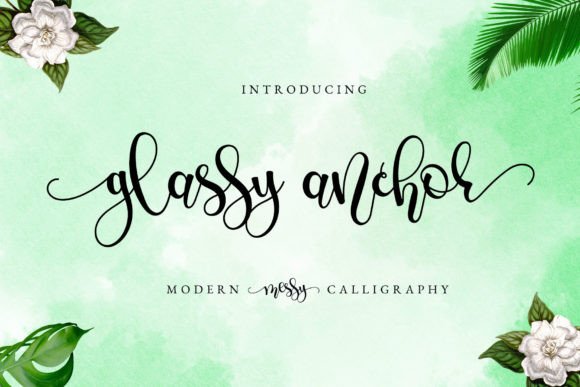
As a publisher and editorial designer who crafts newsletters, digital magazines, and branded printables for lifestyle creators and independent educators, I rely on Glassy Anchor as a refined Script Handwritten typeface that elevates tone without sacrificing clarity. It’s not just another decorative font — Glassy Anchor is a chic lettered and graceful script font with subtle contrast, delicate entry/exit strokes, and natural rhythm that reads like hand-inked calligraphy but scales flawlessly across digital and print formats. Its ravishing style bridges warmth and polish, making it ideal for content brands that value authenticity, sophistication, and visual cohesion.
Glassy Anchor for Wedding Invitations and Elegant Branding
When designing wedding guides, vendor directories, or printable ceremony programs, Glassy Anchor delivers immediate emotional resonance. As a Script Handwritten font, it evokes intimacy and intention — perfect for headlines like “Our Story Begins Here” or monogrammed chapter openers in a keepsake ebook. Unlike overly ornate scripts that blur at small sizes, Glassy Anchor maintains legibility even at 18pt in PDF exports, and its clean vector outlines render crisply on mobile screens and printed stationery. Pair it with a warm serif font like Adobe Garamond for body text to balance elegance with readability — a pairing that reinforces brand trust in premium digital downloads or client-facing publications.
Glassy Anchor for Social Media Posts That Stop Scrolling
In crowded feeds, Glassy Anchor gives your quote graphics and announcement banners distinct voice and texture. Because it’s a Script Handwritten font built for impact, not immersion, it excels in short-form, high-contrast applications: Instagram carousel headers, Pinterest quote pins, or newsletter banner accents. Use it for pull quotes layered over soft photography — its graceful curves soften bold imagery while guiding the eye naturally. Avoid setting full paragraphs in Glassy Anchor; instead, reserve it for 3–7 word statements where personality matters most. For accessibility, always pair with a high-contrast sans serif (like Inter or Montserrat) for captions and alt-text context.
Glassy Anchor for Ebook Covers and Chapter Titles
Your ebook cover is the first editorial decision readers make — and Glassy Anchor helps signal genre, audience, and quality before a single word is read. As a premium Fonts choice for lifestyle, coaching, and wedding-planning ebooks, it conveys care and curation. Try using Glassy Anchor for the main title only, set large and centered over minimalist typography layouts. Its letterforms have enough character to stand alone but won’t compete with supporting elements like author names or subtitle treatments. For interior use, apply Glassy Anchor selectively: chapter openers, section dividers, and illustrated quote blocks — never body copy. This preserves pacing and honors reader attention spans.
Glassy Anchor for Newsletter Headers and Lead Magnet Design
Subscribers scan quickly — so your newsletter header must communicate authority and warmth in under two seconds. Glassy Anchor achieves both: its fluidity suggests approachability, while its precision signals professionalism. As a Script Handwritten font, it works especially well for opt-in lead magnets like printable planners, gratitude journals, or seasonal recipe guides. When used for titles like “Your Winter Self-Care Kit” or “5-Minute Morning Rituals,” it adds tactile charm without undermining credibility. Just ensure your email platform supports webfont embedding or convert key headers to SVG for consistent rendering — Glassy Anchor’s clean outlines hold up beautifully in exported graphics.
Glassy Anchor for Printables, Worksheets, and Branded Templates
If you sell editable Canva templates, Notion workbooks, or printable planners, Glassy Anchor strengthens perceived value instantly. Its graceful script style transforms functional layouts into aspirational tools — think “Weekly Reflection Prompts” or “Goal Tracker” headers that feel personally inscribed. As one of the more versatile Fonts in the Script Handwritten category, it includes standard OpenType features like discretionary ligatures and stylistic alternates (check your license), allowing subtle customization across product lines. For commercial use — whether embedded in editable PDFs, licensed for resale in template shops, or used in paid newsletters — confirm your Glassy Anchor license permits redistribution. Most premium versions do, but always verify before packaging for digital marketplaces.
Glassy Anchor Paired With Readable Body Fonts for Editorial Balance
No Script Handwritten font lives in isolation — and Glassy Anchor shines brightest when paired intentionally. For long-form blogs or magazine-style newsletters, use Glassy Anchor for H1s and pull quotes, then switch to a highly legible serif (e.g., Merriweather) or neutral sans serif (e.g., Lato) for body text. This hierarchy improves scannability and reduces cognitive load. In printables, consider using Glassy Anchor for decorative borders or corner flourishes — its light weight and airy spacing make it ideal for subtle background textures. And because it’s designed with consistent x-height and spacing, it aligns cleanly with grid-based layouts in Adobe InDesign or Figma — essential for multi-page editorial projects.
Glassy Anchor for Digital Magazines and Content Branding Consistency
Consistent typography builds recognition — and Glassy Anchor serves as a memorable anchor point across your digital magazine’s covers, issue headers, and social teasers. As a Fonts asset, it helps unify disparate content types: a wellness feature, a personal essay, and a seasonal recipe round-up can all share visual DNA through strategic Glassy Anchor usage. Apply it to recurring elements — masthead accents, contributor bios, or seasonal taglines — and maintain strict size and color rules to avoid visual fatigue. Readers subconsciously associate that graceful script with your voice, deepening engagement over time. Just remember: Glassy Anchor is a display font, not a workhorse. Let it lead — then step back and let your content breathe.